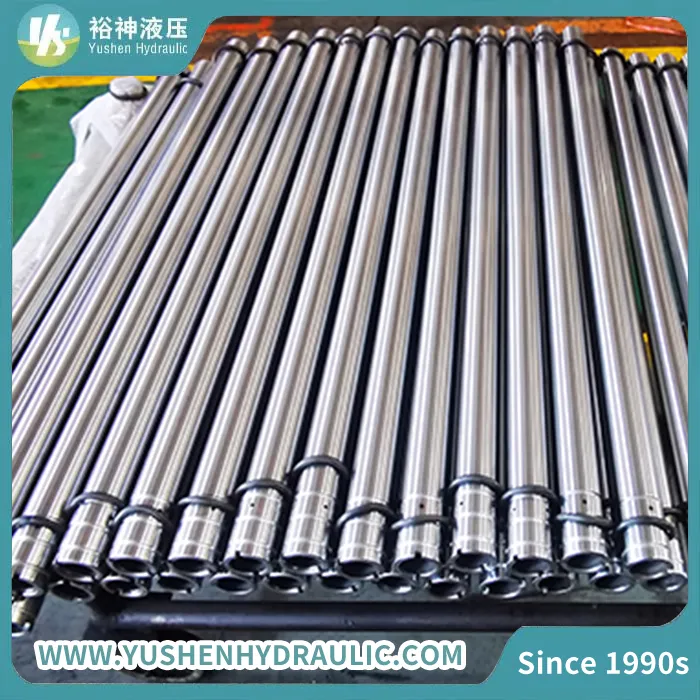
Hey there! As a supplier of 42Crmo4 chromed rods, I'm super excited to chat with you about the quality control measures we take in the production process. It's no secret that quality is king in our industry, and we go the extra mile to make sure every 42Crmo4 chromed rod that leaves our facility meets the highest standards.
Let's start from the very beginning - the raw materials. We source our 42Crmo4 steel from trusted suppliers. Before we even start working with a new batch, we conduct a series of inspections. We check the chemical composition of the steel to make sure it contains the right amounts of chromium, molybdenum, and other elements. Using advanced spectrometers, we can quickly and accurately analyze the materials. This initial check is crucial because if the raw materials aren't up to par, no matter how well we perform the rest of the production steps, the final product won't meet the required quality.
Once we've verified the raw materials, it's time for the forging process. Forging helps to improve the internal structure of the rod, making it stronger and more durable. During forging, we carefully control the temperature and pressure. Too much heat or pressure can cause cracks in the rod, while too little won't give it the desired strength. We use sophisticated monitoring systems to keep track of these parameters in real - time. If there are any deviations from the set values, the system alerts us immediately, and we can make the necessary adjustments.
After forging, the rods go through a heat treatment process. This step is all about achieving the right balance of hardness and toughness. We use a combination of quenching and tempering. The quenching process involves rapidly cooling the rod in a special medium, like oil or water. This creates a hard outer layer. But if the cooling rate is too fast, the rod can become brittle. That's why we follow a very precise cooling schedule. Then comes tempering, where we heat the rod to a lower temperature to relieve internal stresses and improve its ductility. We monitor the temperature and time during tempering very closely to ensure the best results.
Now, let's talk about the chrome plating. Chrome plating not only gives the rod a shiny appearance but also provides corrosion resistance and wear resistance. Before plating, we thoroughly clean the rod to remove any dirt, grease, or oxides. A dirty surface can cause the chrome layer to peel off or have uneven thickness. We use a multi - step cleaning process that includes degreasing, pickling, and rinsing.
Once the rod is clean, it's ready for the chrome plating bath. We use a high - quality chrome plating solution and control the plating process parameters such as current density, temperature, and plating time. These factors directly affect the quality of the chrome layer. A proper current density ensures even deposition of chrome, while the right temperature and plating time determine the thickness and hardness of the layer. We regularly test the thickness of the chrome layer using non - destructive testing methods, like magnetic induction or eddy - current testing.


In addition to these in - process checks, we also conduct a series of final inspections. Firstly, we check the dimensions of the rod. Any deviation from the specified diameter, length, or straightness can cause problems for our customers. We use precision measuring tools like calipers, micrometers, and laser measuring devices to ensure the dimensions are within the tolerance range.
We also test the surface finish of the rod. A smooth surface is essential for the rod to function properly in applications like Stainless Steel Chrome Plated Piston Rod and Hydraulic Cylinder Chrome Plated Rod. We use surface roughness testers to measure the surface finish and make sure it meets the required standards.
Another important test is the hardness test. We check the hardness of both the base material and the chrome layer using hardness testers. The hardness of the rod affects its wear resistance and strength. Different applications may require different hardness levels, so we make sure the rod has the appropriate hardness according to the customer's specifications.
We also perform corrosion resistance tests. This is especially important for rods used in harsh environments, such as those in Hydraulic Hard Chrome Piston Rod. We expose the rod to a corrosive environment, like a salt - spray chamber, for a certain period of time and then check for any signs of corrosion. If the rod fails this test, it won't be shipped to the customer.
All of our quality control processes are documented in detail. We keep records of every batch of rods, including the raw material inspection results, production parameters, and final inspection reports. This documentation not only helps us to trace back any issues but also gives our customers confidence in our products.
In conclusion, quality control in the production of 42Crmo4 chromed rods is a complex and multi - step process. From the selection of raw materials to the final inspections, we pay attention to every detail to ensure the highest quality. If you're in the market for high - quality 42Crmo4 chromed rods, don't hesitate to get in touch. We're always ready to discuss your requirements and offer the best solutions for your needs.