


Can the E355 Cylinder Tube be used in high - temperature environments?
As a well - established supplier of E355 Cylinder Tubes, I often receive inquiries from customers about the suitability of our products in high - temperature environments. This is a crucial question, as many industrial applications, such as in power generation, metallurgy, and chemical processing, expose equipment to extreme temperatures. In this blog, I will delve into the properties of E355 Cylinder Tubes and analyze whether they can withstand high - temperature conditions.

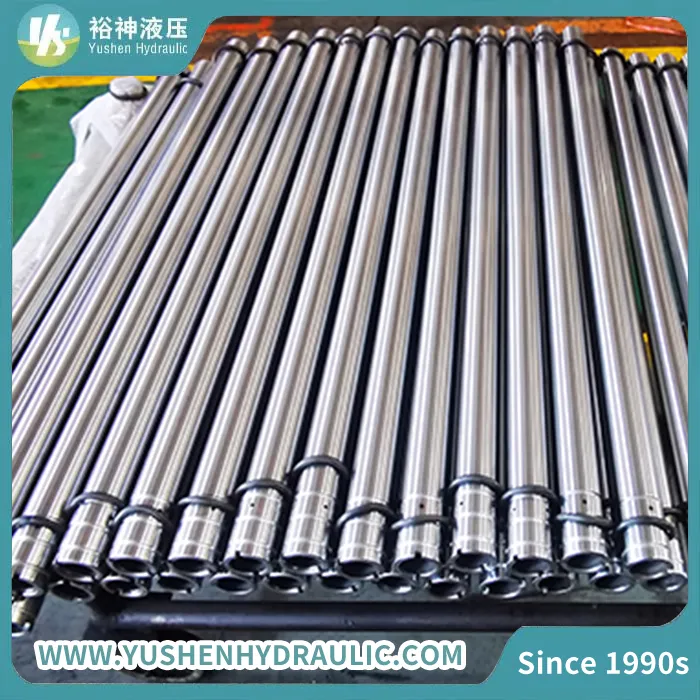
Understanding E355 Cylinder Tubes
E355 Cylinder Tubes are made from a specific grade of steel that is known for its good mechanical properties. The "E355" designation refers to a European standard steel grade, which has a minimum yield strength of 355 MPa. These tubes are commonly used in hydraulic cylinders, where they provide a smooth and durable surface for the piston to move within.
The manufacturing process of E355 Cylinder Tubes involves precision machining and heat treatment to ensure the desired hardness and dimensional accuracy. The tubes are typically cold - drawn or hot - rolled, followed by processes like honing to achieve a high - quality internal surface finish.
Factors Affecting Performance in High - Temperature Environments
To determine if E355 Cylinder Tubes can be used in high - temperature environments, we need to consider several factors:
1. Material Properties at High Temperatures
Steel, like most materials, experiences changes in its mechanical properties when exposed to high temperatures. As the temperature rises, the yield strength and tensile strength of the steel tend to decrease. For E355 steel, at elevated temperatures, the reduction in strength can be significant. This means that the tube may deform more easily under load, which could lead to issues such as leakage in hydraulic cylinders or premature failure.
2. Thermal Expansion
Another important factor is thermal expansion. When heated, materials expand, and E355 Cylinder Tubes are no exception. The amount of expansion depends on the coefficient of thermal expansion of the steel. In a high - temperature environment, the tube may expand, causing dimensional changes. If these changes are not accounted for in the design of the hydraulic system, it can lead to problems such as binding of the piston or misalignment of components.
3. Oxidation and Corrosion
High - temperature environments often expose materials to oxygen and other corrosive agents. E355 steel is susceptible to oxidation at elevated temperatures, which can form a layer of rust on the surface of the tube. This oxidation not only weakens the material but can also cause pitting and surface roughness, which can affect the performance of the hydraulic system. Additionally, in some chemical - rich high - temperature environments, the steel may be subject to chemical corrosion, further degrading its properties.
Case Studies and Research Findings
There have been several studies on the performance of steel materials in high - temperature environments. Some research has shown that E355 steel can maintain a certain level of strength up to a specific temperature threshold. For example, in a study conducted by a group of material scientists, it was found that E355 steel retained about 70% of its room - temperature yield strength at 300°C. However, as the temperature increased beyond 400°C, the strength reduction became more pronounced.
In industrial applications, there are also real - world examples of the use of E355 Cylinder Tubes in high - temperature settings. In some less - extreme high - temperature scenarios, such as in some light - duty hydraulic systems in hot workshops where the temperature does not exceed 200 - 300°C, E355 Cylinder Tubes have been used with proper design considerations. However, in more severe environments, such as in direct contact with molten metals or in high - temperature furnaces, alternative materials are usually preferred.
Mitigation Strategies
If you need to use E355 Cylinder Tubes in high - temperature environments, there are several strategies that can be employed to improve their performance:
1. Heat Treatment
Special heat treatment processes can be applied to the E355 Cylinder Tubes to enhance their high - temperature properties. For example, a process called tempering at a higher temperature can increase the material's resistance to softening at elevated temperatures.
2. Coating
Applying a protective coating to the surface of the tube can help prevent oxidation and corrosion. Coatings such as ceramic coatings or high - temperature paints can provide a barrier between the steel and the harsh environment. For instance, some chrome - based coatings can not only improve the corrosion resistance but also enhance the wear resistance of the tube. You can find more information about chrome - related products like Chrome Plating Piston Rod, CK45 Hard Chromed Piston Rod, and Chrome Plated Smooth Rod on our website.
3. Design Considerations
In the design of the hydraulic system, it is essential to account for thermal expansion. This can be done by leaving sufficient clearance between the tube and other components or by using expansion joints. Additionally, proper insulation can be used to reduce the heat transfer to the E355 Cylinder Tubes, keeping their operating temperature within an acceptable range.
Conclusion
In summary, while E355 Cylinder Tubes have good mechanical properties under normal conditions, their use in high - temperature environments is limited. The reduction in strength, thermal expansion, and susceptibility to oxidation and corrosion are significant challenges. However, with appropriate mitigation strategies such as heat treatment, coating, and proper design, it is possible to use E355 Cylinder Tubes in some less - extreme high - temperature applications.
If you are considering using E355 Cylinder Tubes in a high - temperature environment or have any other questions about our products, I encourage you to reach out to us for a detailed discussion. Our team of experts can provide you with personalized advice based on your specific requirements. We are committed to providing high - quality products and excellent service to meet your industrial needs. Contact us today to start a procurement discussion and find the best solution for your project.
References
- Material Science Handbook - Steel Properties at High Temperatures
- Industrial Hydraulic Systems Design and Applications
- Research Papers on the Performance of E355 Steel in High - Temperature Environments


