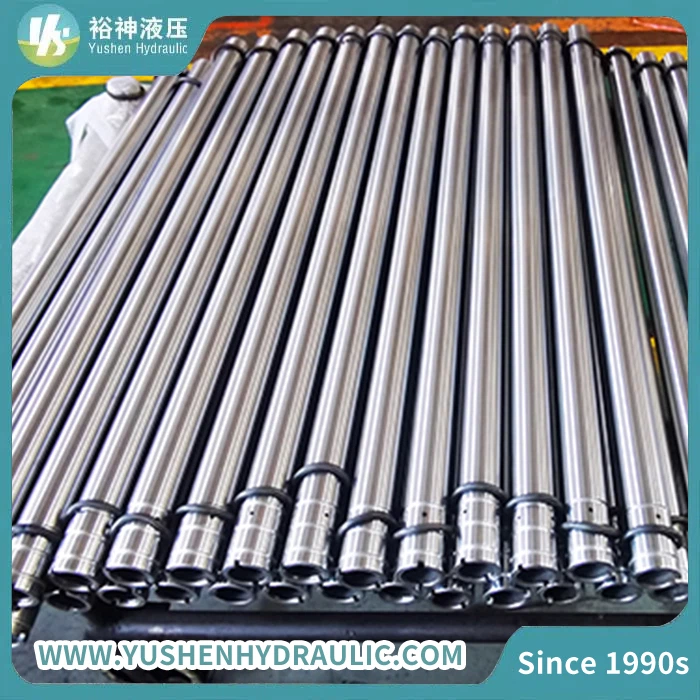
Hey there! As a supplier of Stainless Steel Honed Tubes, I often get asked about how to check the concentricity of these tubes. Concentricity is a crucial factor when it comes to the performance and quality of stainless steel honed tubes, so I'm here to share some practical ways to check it.
What is Concentricity and Why Does It Matter?
First off, let's quickly understand what concentricity is. Concentricity refers to the degree to which the center axis of a tube aligns with its outer surface. In simple terms, it shows how evenly the tube is centered. For stainless steel honed tubes, good concentricity is super important. It ensures smooth operation in applications like hydraulic cylinders, where any misalignment can lead to uneven wear, leaks, and even system failures.
Tools You'll Need
To check the concentricity of a stainless steel honed tube, you'll need a few tools. The most common ones are:
- Dial Indicator: This is a precision tool that measures small linear distances. It's great for detecting even the slightest misalignment.
- V-Blocks: These are used to support the tube and keep it stable during the measurement.
- Surface Plate: A flat and smooth surface where you can place the tube and perform the measurements accurately.
Step-by-Step Guide to Checking Concentricity
Now, let's get into the actual process of checking the concentricity of a stainless steel honed tube.
Step 1: Prepare the Tube and Tools
First, make sure the tube is clean and free from any debris or contaminants. Place the tube on the V-blocks, which are sitting on the surface plate. The V-blocks should support the tube at two points along its length.


Step 2: Set Up the Dial Indicator
Attach the dial indicator to a magnetic base or a stand. Position the indicator's probe so that it touches the outer surface of the tube. Make sure the probe is perpendicular to the tube's surface.
Step 3: Take Initial Readings
Slowly rotate the tube by hand. As you rotate, the dial indicator will show the variations in the distance between the probe and the tube's surface. Take note of the maximum and minimum readings. The difference between these two readings is called the total indicator reading (TIR). A smaller TIR indicates better concentricity.
Step 4: Check Different Sections
To get a more accurate picture of the tube's concentricity, repeat the process at different sections along the length of the tube. This will help you identify any local variations in concentricity.
Step 5: Analyze the Results
Once you have taken all the readings, analyze them to determine the overall concentricity of the tube. If the TIR is within the acceptable tolerance for your application, then the tube is considered to have good concentricity. If not, you may need to take corrective measures, such as re-honing the tube or replacing it.
Other Methods for Checking Concentricity
Apart from using a dial indicator, there are other methods you can use to check the concentricity of a stainless steel honed tube.
Laser Scanning
Laser scanning is a non-contact method that uses lasers to measure the shape and dimensions of the tube. It can provide highly accurate measurements and can detect even the smallest deviations in concentricity. However, it requires specialized equipment and is more expensive than using a dial indicator.
Optical Measurement
Optical measurement techniques, such as vision systems, can also be used to check the concentricity of a tube. These systems use cameras and software to analyze the image of the tube and measure its dimensions. They are fast and can provide real-time results, but they also require specialized equipment and may not be as accurate as laser scanning.
Importance of Concentricity in Different Applications
The importance of concentricity varies depending on the application. Here are some examples:
Hydraulic Cylinders
In hydraulic cylinders, the piston rod moves inside the honed tube. If the tube has poor concentricity, the piston rod may rub against the tube's inner surface, causing wear and tear. This can lead to leaks, reduced efficiency, and even system failure. Good concentricity ensures smooth operation and extends the lifespan of the hydraulic cylinder.
Automotive Applications
In automotive applications, stainless steel honed tubes are used in various components, such as shock absorbers and steering systems. Concentricity is crucial in these applications to ensure proper alignment and smooth operation. A misaligned tube can cause vibrations, noise, and premature wear of the components.
Industrial Machinery
In industrial machinery, stainless steel honed tubes are used in a wide range of applications, such as pumps, compressors, and conveyors. Good concentricity is essential to ensure the efficient operation of these machines and to prevent breakdowns.
Conclusion
Checking the concentricity of a stainless steel honed tube is an important step in ensuring its quality and performance. By using the right tools and methods, you can accurately measure the concentricity and identify any issues. Whether you're using a dial indicator, laser scanning, or optical measurement, it's important to follow the proper procedures and take multiple readings to get an accurate picture.
If you're in the market for high-quality stainless steel honed tubes, we're here to help. We offer a wide range of tubes with excellent concentricity and other quality features. You can also check out our other products like Chrome Plated Mild Steel Round Bar, Seamless Carbon Steel Tube, and Hydraulic Cylinder Piston Rod. If you have any questions or need more information, feel free to reach out to us for a purchase consultation.