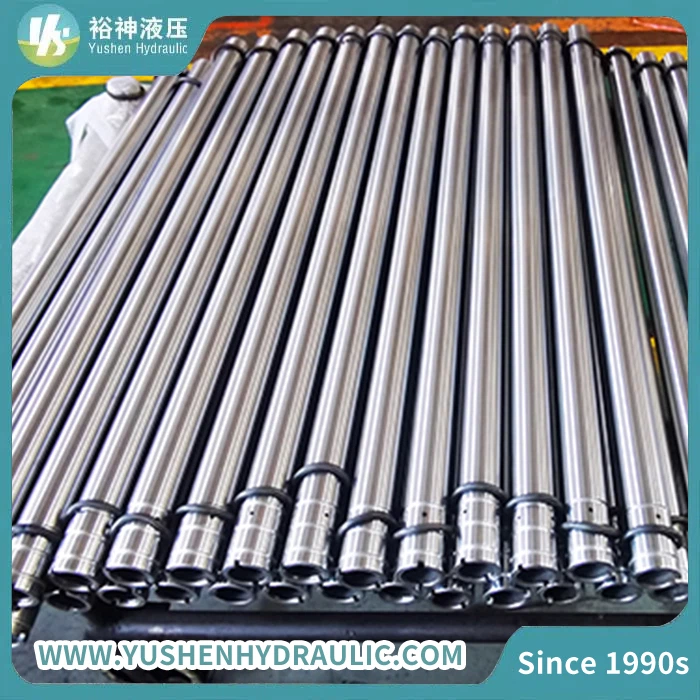
When it comes to surface finishing for rods in industrial applications, two popular methods stand out: hard chrome plating and electroless nickel plating. As a supplier of [Hard Chrome Plated Rod], I've had extensive experience with both processes and understand their unique characteristics, advantages, and limitations. In this blog post, I'll delve into the differences between hard chrome plated rods and electroless nickel plated rods, helping you make an informed decision for your specific needs.
1. Coating Composition and Deposition Process
Hard Chrome Plated Rods
Hard chrome plating involves the electro - deposition of chromium onto a rod substrate. The process takes place in an electrolytic bath where the rod acts as the cathode, and a chromium anode is used. A direct current is applied, causing chromium ions in the bath to be reduced and deposited onto the surface of the rod. The resulting chromium coating is extremely hard, with a typical hardness ranging from 600 to 1100 HV (Vickers hardness).
The composition of hard chrome plating is primarily pure chromium. The thickness of the coating can vary depending on the application, but it usually ranges from 0.001 to 0.01 inches (0.025 to 0.254 mm). This process is highly controllable, allowing for precise thickness control and uniform coating distribution on the rod surface.
Electroless Nickel Plated Rods
Electroless nickel plating, on the other hand, is a chemical process rather than an electrolytic one. It involves the reduction of nickel ions in a solution using a reducing agent, typically sodium hypophosphite. The reaction occurs autocatalytically on the surface of the rod, meaning that once the plating starts, it continues to build up the nickel - phosphorus alloy coating without the need for an external electrical current.
The composition of electroless nickel plating is a nickel - phosphorus alloy, with the phosphorus content typically ranging from 2% to 14%. The hardness of electroless nickel plating depends on the phosphorus content and heat treatment. Low - phosphorus electroless nickel (2 - 5% P) can have a hardness of around 500 - 600 HV, while high - phosphorus electroless nickel (9 - 14% P) can reach a hardness of 700 - 900 HV after heat treatment. The coating thickness can range from 0.0002 to 0.01 inches (0.005 to 0.254 mm).
2. Physical and Mechanical Properties
Wear Resistance
Both hard chrome plated rods and electroless nickel plated rods offer excellent wear resistance, but their performance can vary depending on the application. Hard chrome plating has a very smooth surface finish, which reduces friction and wear in sliding contact applications. The high hardness of the chrome coating makes it highly resistant to abrasion, galling, and erosion. It is commonly used in applications such as hydraulic cylinders, where the rod is subjected to high - pressure sliding contact with seals and other components. For more information on [Hydraulic Chrome Rod], you can visit [/chrome-plated-rods/hydraulic-chrome-rod.html].
Electroless nickel plating also provides good wear resistance, especially in applications where the wear is caused by particle abrasion. The nickel - phosphorus alloy coating has a fine - grained structure that can resist the penetration of abrasive particles. In some cases, the wear resistance of electroless nickel plating can be enhanced through heat treatment, which further increases its hardness.
Corrosion Resistance
Corrosion resistance is another important factor to consider when choosing between hard chrome plated rods and electroless nickel plated rods. Hard chrome plating offers good corrosion resistance in many environments, especially in mild to moderately corrosive conditions. The chromium oxide layer that forms on the surface of the chrome coating acts as a protective barrier against corrosion. However, hard chrome plating can be susceptible to pitting corrosion in highly corrosive environments, such as those containing chlorides.
Electroless nickel plating, particularly high - phosphorus electroless nickel, provides excellent corrosion resistance. The nickel - phosphorus alloy coating forms a dense, uniform layer that is highly resistant to a wide range of corrosive agents, including acids, alkalis, and salts. It is often used in applications where the rod is exposed to harsh chemical environments, such as in the chemical processing industry.
Lubricity
Hard chrome plated rods have a relatively low coefficient of friction, which provides good lubricity in sliding contact applications. The smooth surface finish of the chrome coating allows for easy movement of the rod against other components, reducing energy consumption and wear.
Electroless nickel plating can also offer good lubricity, especially when combined with proper surface finishing techniques. However, the lubricity of electroless nickel plating may be slightly lower than that of hard chrome plating, depending on the specific application and operating conditions.
3. Application Suitability
Hard Chrome Plated Rods
Hard chrome plated rods are widely used in applications that require high wear resistance, low friction, and good dimensional stability. Some common applications include:
- Hydraulic and Pneumatic Cylinders: As mentioned earlier, hard chrome plated rods are commonly used in hydraulic cylinders due to their excellent wear resistance and low friction. They can withstand the high - pressure sliding contact with seals and other components, ensuring smooth and reliable operation of the cylinder. For details on [Hard Chrome Plated Steel Rod] suitable for such applications, you can visit [/chrome-plated-rods/hard-chrome-plated-steel-rod.html].
- Machine Tools: In machine tool applications, hard chrome plated rods are used for guideways, shafts, and other components that require precise linear motion. The smooth surface finish and high wear resistance of the chrome coating ensure accurate positioning and long - term durability.
- Printing and Textile Machinery: Hard chrome plated rods are used in printing and textile machinery for applications such as rollers and shafts. The low friction and high wear resistance of the chrome coating help to improve the quality of the printed or woven products and reduce maintenance requirements.
Electroless Nickel Plated Rods
Electroless nickel plated rods are preferred in applications where corrosion resistance and uniform coating thickness are critical. Some common applications include:


- Chemical Processing Industry: In the chemical processing industry, electroless nickel plated rods are used in equipment such as pumps, valves, and agitators. The excellent corrosion resistance of the nickel - phosphorus alloy coating allows the rods to withstand the harsh chemical environments without significant degradation.
- Food and Beverage Industry: Electroless nickel plating is often used in the food and beverage industry due to its non - toxic and corrosion - resistant properties. The rods can be used in equipment such as conveyors, mixers, and filling machines, where they need to be resistant to food acids and cleaning agents.
- Electronics Industry: In the electronics industry, electroless nickel plated rods are used in applications such as connectors and switches. The uniform coating thickness and good electrical conductivity of the nickel - phosphorus alloy coating make it suitable for these applications.
4. Cost Considerations
The cost of hard chrome plating and electroless nickel plating can vary depending on several factors, including the coating thickness, the size and complexity of the rod, and the volume of production.
Hard chrome plating typically has a lower initial cost compared to electroless nickel plating. The electro - deposition process is relatively simple and well - established, which allows for cost - effective production. However, the disposal of chrome - containing waste from the plating process can be expensive due to environmental regulations.
Electroless nickel plating generally has a higher initial cost due to the complexity of the chemical process and the cost of the chemicals used. However, the long - term cost savings can be significant in applications where the corrosion resistance of the electroless nickel coating reduces the need for frequent replacement of the rods.
5. Environmental Impact
The environmental impact of hard chrome plating and electroless nickel plating is an important consideration in today's industrial landscape.
Hard chrome plating involves the use of hexavalent chromium, which is a highly toxic and carcinogenic substance. The disposal of chrome - containing waste from the plating process requires special handling and treatment to comply with environmental regulations. In recent years, there has been increasing pressure to reduce the use of hexavalent chromium in the plating industry, and some companies are exploring alternative plating methods.
Electroless nickel plating is generally considered to be more environmentally friendly than hard chrome plating. The chemicals used in the electroless nickel plating process are less toxic, and the waste generated can be more easily managed. However, the disposal of the reducing agent and other chemicals still needs to be done in accordance with environmental regulations.
Conclusion
In conclusion, both hard chrome plated rods and electroless nickel plated rods have their own unique advantages and disadvantages. The choice between the two depends on the specific requirements of your application, such as wear resistance, corrosion resistance, lubricity, cost, and environmental impact.
As a supplier of [Hard Chrome Plated Rod], I can provide high - quality hard chrome plated rods that meet your specific needs. Our rods are manufactured using advanced plating technology and strict quality control measures to ensure excellent performance and reliability. If you are interested in purchasing [Hard Chrome Plated Rod] or need more information about our products, please feel free to contact us for procurement and negotiation.
If you are also in need of [Honed Cylinder Pipe], you can visit [/seamless-steel-tube/honed-cylinder-pipe.html] to learn more about our products in this category.
References
- ASM Handbook, Volume 5: Surface Engineering, ASM International.
- Metals Handbook, Desk Edition, ASM International.
- Plating and Surface Finishing Magazine.