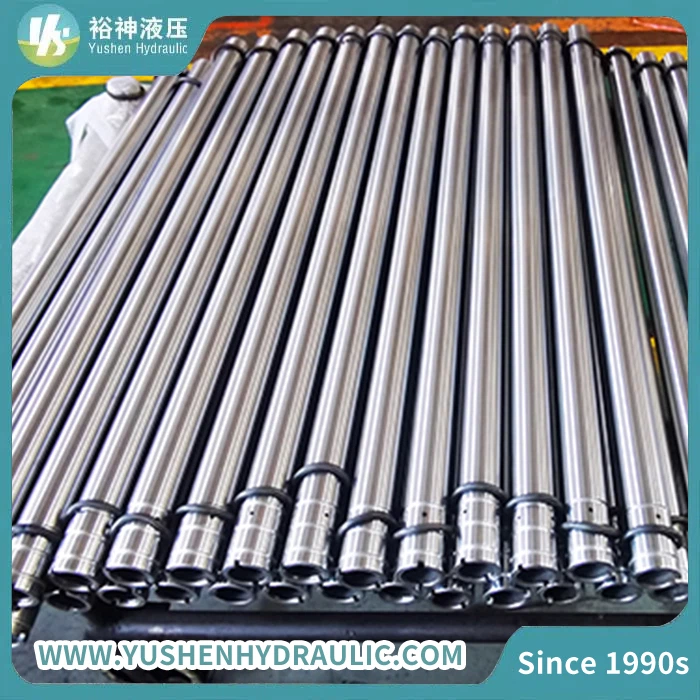
Hey there! As a supplier of seamless steel honed tubes, I've been in the industry long enough to know a thing or two about the quality standards that matter. In this blog, I'll break down what makes a top - notch seamless steel honed tube and why it's crucial for various applications.
First off, let's talk about the raw material. The quality of seamless steel honed tubes starts with the steel itself. High - grade steel is a must. It should have a consistent chemical composition. This means the amount of carbon, manganese, sulfur, and other elements in the steel needs to be within a specific range. For example, too much sulfur can make the steel brittle, while the right amount of carbon can enhance its strength. A reliable supplier will source steel from reputable mills that follow strict quality control measures during the steel - making process.
The manufacturing process is another key factor. Seamless tubes are made through a process that doesn't involve welding. This is important because welded joints can be weak points in the tube. The seamless manufacturing process ensures a uniform structure throughout the tube. After the tube is initially formed, the honing process comes in. Honing is like giving the tube a super - smooth interior finish. It involves using abrasive stones to remove small amounts of material from the inner surface of the tube.
One of the main quality standards for the honed surface is the surface roughness. The surface roughness of a high - quality seamless steel honed tube should be very low. A smooth surface reduces friction when a piston or other components move inside the tube. This is especially important in hydraulic cylinders, where a rough surface can cause wear and tear on the piston seals, leading to leaks and reduced efficiency. A typical surface roughness value for a good - quality honed tube might be in the range of 0.2 to 0.8 micrometers.


The dimensional accuracy of the tube is also critical. The outer diameter (OD), inner diameter (ID), and wall thickness need to be within tight tolerances. For example, if the OD is off by even a small amount, it might not fit properly into the machinery where it's supposed to be installed. The same goes for the ID; if it's not the right size, the piston or other internal components won't function as intended. A well - made seamless steel honed tube will have an OD tolerance of around ± 0.1% to ± 0.3% and an ID tolerance of ± 0.05% to ± 0.2%.
Wall thickness uniformity is another aspect of dimensional accuracy. The wall thickness should be consistent along the entire length of the tube. Inconsistent wall thickness can lead to uneven stress distribution when the tube is under pressure. This can cause the tube to fail prematurely, especially in high - pressure applications. A good quality control system will measure the wall thickness at multiple points along the tube to ensure uniformity.
The straightness of the tube is also an important quality standard. A bent or curved tube can cause problems during installation and operation. In some applications, like in a long - stroke hydraulic cylinder, a tube that's not straight can make the piston move unevenly, leading to premature wear and reduced performance. The straightness of a seamless steel honed tube should be within a few millimeters per meter of length.
Now, let's touch on the mechanical properties of the tube. Tensile strength is a measure of how much pulling force the tube can withstand before breaking. A high - quality seamless steel honed tube will have a good tensile strength, which is typically in the range of 400 to 800 megapascals (MPa), depending on the type of steel used. Yield strength is another important mechanical property. It's the point at which the tube starts to deform permanently under stress. A higher yield strength means the tube can handle more pressure without deforming.
Hardness is also a key mechanical property. The hardness of the tube affects its wear resistance. A harder tube will resist scratches and abrasion better, especially in applications where there's a lot of movement and contact between the tube and other components. The hardness of a seamless steel honed tube can be measured using various methods, such as the Rockwell or Brinell hardness tests.
Corrosion resistance is a must, especially for tubes that are used in harsh environments. The steel used in the tube can be treated with various coatings or heat treatments to enhance its corrosion resistance. For example, some tubes are galvanized or given a special anti - rust coating. In addition, the honed surface can be protected with a thin layer of oil or other lubricants to prevent rust formation.
When it comes to applications, seamless steel honed tubes are used in a wide range of industries. They're commonly used in hydraulic cylinders, which are found in construction equipment, agricultural machinery, and industrial automation systems. In these applications, the quality of the tube directly affects the performance and reliability of the entire system.
If you're in the market for high - quality seamless steel honed tubes, you might also be interested in some related products. For instance, we offer Customized Hard Chrome Plated Rod, Hard Chrome Plated Steel Rod, and Hard Chrome Plated Round Rod. These rods can be used in conjunction with the honed tubes in various applications to enhance the overall performance of the system.
In conclusion, the quality standards for seamless steel honed tubes are multi - faceted. From the raw material to the manufacturing process, and from the surface finish to the mechanical properties, every aspect plays a crucial role in determining the quality of the tube. When you're looking for a supplier, make sure they have a good quality control system in place to ensure that the tubes meet all these standards.
If you're interested in purchasing seamless steel honed tubes or any of our related products, feel free to reach out for a detailed discussion. We're here to help you find the right solutions for your specific needs.
References:
- Steel Manufacturing Handbook
- Hydraulic Cylinder Design and Application Guide
- Quality Control in Tube Manufacturing Literature