


As a seasoned supplier of S45C piston rods, I've witnessed firsthand the importance of understanding the tensile strength of these components. Tensile strength is a critical parameter that determines the maximum amount of tensile stress a material can withstand before failure. In this blog post, I'll share insights on how to calculate the tensile strength of S45C piston rods, which will help you make informed decisions when selecting the right piston rods for your applications.
Understanding S45C Material
S45C is a medium carbon steel that is widely used in the manufacturing of piston rods due to its excellent combination of strength, toughness, and machinability. It contains approximately 0.42 - 0.48% carbon, which gives it higher strength compared to low - carbon steels. The chemical composition of S45C also includes small amounts of other elements such as manganese, silicon, sulfur, and phosphorus, which contribute to its overall properties.
The Concept of Tensile Strength
Tensile strength is defined as the maximum stress that a material can withstand while being stretched or pulled before necking (a reduction in cross - sectional area) or fracturing occurs. It is usually expressed in units of force per unit area, such as megapascals (MPa) or pounds per square inch (psi).

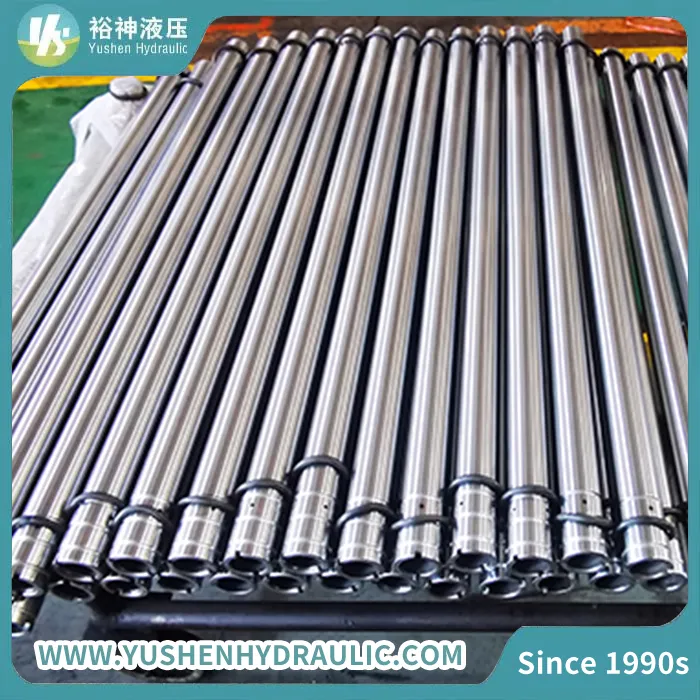
Factors Affecting the Tensile Strength of S45C Piston Rods
- Heat Treatment: Heat treatment processes such as quenching and tempering can significantly affect the tensile strength of S45C piston rods. Quenching involves rapid cooling of the heated material, which results in a hard and brittle structure. Tempering is then carried out to reduce the brittleness and improve the toughness of the material. Properly heat - treated S45C piston rods can have higher tensile strength compared to non - heat - treated ones.
- Microstructure: The microstructure of S45C steel plays a crucial role in determining its tensile strength. A fine - grained microstructure generally leads to higher strength and better mechanical properties. Factors such as the cooling rate during solidification and heat treatment can influence the grain size and microstructure of the material.
- Surface Finish and Coating: The surface finish of the piston rod can also affect its tensile strength. A smooth surface finish reduces stress concentrations, which can prevent premature failure. Additionally, coatings such as Chrome Plated Smooth Rod, Chrome Plating Piston Rod, and Hard Chromed Plated Piston Rod can enhance the corrosion resistance and wear resistance of the piston rod, which in turn can affect its overall performance and tensile strength.
Calculating the Tensile Strength of S45C Piston Rods
The most accurate way to determine the tensile strength of an S45C piston rod is through a tensile test. Here are the steps involved in conducting a tensile test:
- Sample Preparation: A test specimen is prepared from the S45C piston rod according to relevant standards such as ASTM E8 or ISO 6892 - 1. The specimen should have a specific shape and dimensions to ensure accurate test results.
- Testing Equipment: A universal testing machine is used to apply a gradually increasing tensile force to the specimen until it fractures. The machine is equipped with sensors to measure the applied force and the corresponding elongation of the specimen.
- Test Procedure: The specimen is mounted in the testing machine, and the initial length and cross - sectional area of the specimen are measured. The machine then applies a tensile force at a constant rate until the specimen breaks. During the test, the force and elongation data are recorded continuously.
- Calculation: The tensile strength is calculated by dividing the maximum force applied during the test by the original cross - sectional area of the specimen. The formula for calculating tensile strength ((\sigma_{t})) is:
(\sigma_{t}=\frac{F_{max}}{A_{0}})
where (\sigma_{t}) is the tensile strength, (F_{max}) is the maximum force applied during the test, and (A_{0}) is the original cross - sectional area of the specimen.
Example Calculation
Let's assume that during a tensile test of an S45C piston rod specimen, the maximum force applied is 50,000 N, and the original cross - sectional area of the specimen is (100 mm^{2}). First, we need to convert the area to square meters: (A_{0}=100\times10^{- 6}m^{2}). Then, we can calculate the tensile strength:
(\sigma_{t}=\frac{50000N}{100\times10^{-6}m^{2}} = 500\times10^{6}Pa=500MPa)
Importance of Tensile Strength in Piston Rod Applications
In piston rod applications, tensile strength is a critical factor that affects the performance and reliability of the system. Piston rods are subjected to high tensile forces during operation, especially in applications such as hydraulic cylinders and automotive engines. If the tensile strength of the piston rod is insufficient, it may fracture under load, leading to system failure and potential safety hazards.
Selecting the Right S45C Piston Rod Based on Tensile Strength
When selecting an S45C piston rod, it's important to consider the specific requirements of your application. You need to determine the maximum tensile force that the piston rod will be subjected to during operation and select a piston rod with a tensile strength that can safely withstand this force. Additionally, you should also consider other factors such as the operating environment, corrosion resistance, and wear resistance.
Conclusion
Calculating the tensile strength of S45C piston rods is essential for ensuring their proper performance and reliability in various applications. By understanding the factors that affect tensile strength and following the correct testing procedures, you can accurately determine the tensile strength of S45C piston rods. As a trusted supplier of S45C piston rods, we have the expertise and resources to provide you with high - quality piston rods that meet your specific requirements. If you are in the market for S45C piston rods or have any questions about their tensile strength, please feel free to contact us for further discussion and procurement.
References
- ASTM E8 - 16a, "Standard Test Methods for Tension Testing of Metallic Materials"
- ISO 6892 - 1:2019, "Metallic materials — Tensile testing — Part 1: Method of test at room temperature"
- ASM Handbook Volume 1: Properties and Selection: Irons, Steels, and High - Performance Alloys


