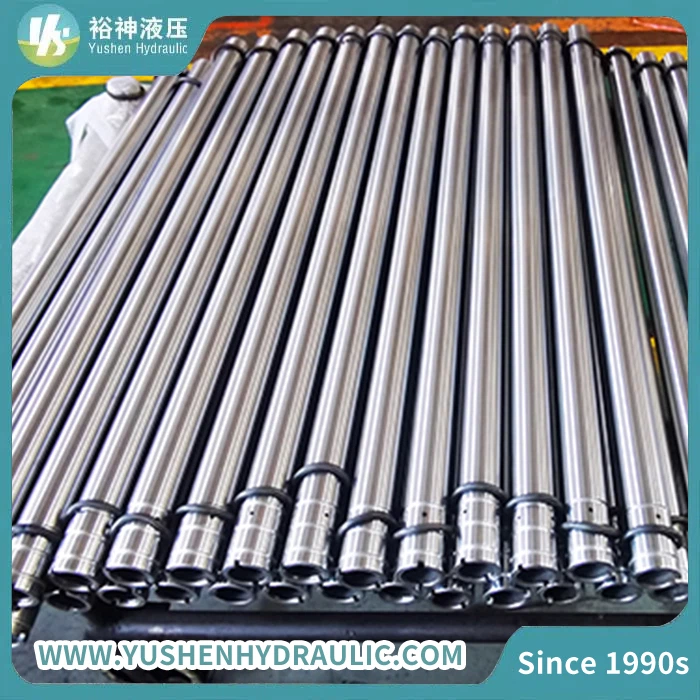
As a supplier of S45C piston rods, I've witnessed firsthand the critical role that alloying elements play in determining the properties of these essential components. S45C, a medium carbon steel, is widely used in piston rod applications due to its good balance of strength, toughness, and machinability. However, the addition of other alloying elements can significantly enhance or modify its properties to meet specific requirements. In this blog post, I'll explore how various alloying elements affect the properties of S45C piston rods.
Carbon (C)
Carbon is the most fundamental alloying element in steel, and its content has a profound impact on the strength and hardness of S45C piston rods. In S45C steel, the carbon content is typically around 0.42 - 0.48%. Higher carbon content increases the strength and hardness of the steel by forming more cementite (Fe₃C) during cooling. This results in a harder and stronger piston rod, which is beneficial for applications that require high wear resistance and load-bearing capacity. However, increasing the carbon content also reduces the ductility and toughness of the steel, making it more brittle and prone to cracking. Therefore, a balance must be struck between strength and ductility when determining the optimal carbon content for S45C piston rods.
Manganese (Mn)
Manganese is another important alloying element in S45C steel. It acts as a deoxidizer and desulfurizer, removing oxygen and sulfur impurities from the steel and improving its cleanliness and quality. Manganese also forms manganese sulfide (MnS) inclusions, which help to improve the machinability of the steel by breaking up chips during machining. In addition, manganese enhances the hardenability of the steel, allowing it to be hardened more effectively during heat treatment. This results in a stronger and more wear-resistant piston rod. Typically, the manganese content in S45C steel is around 0.60 - 0.90%.
Silicon (Si)
Silicon is often added to S45C steel as a deoxidizer and to improve its strength and hardness. It also enhances the resistance of the steel to oxidation and corrosion. Silicon forms a thin oxide layer on the surface of the steel, which protects it from further oxidation and corrosion. In addition, silicon strengthens the ferrite phase in the steel, improving its overall strength and hardness. The silicon content in S45C steel is usually around 0.15 - 0.35%.
Chromium (Cr)
Chromium is a powerful alloying element that can significantly improve the corrosion resistance, wear resistance, and hardenability of S45C piston rods. When added to the steel, chromium forms a stable chromium oxide layer on the surface, which provides excellent protection against corrosion. This makes S45C piston rods with chromium addition suitable for use in harsh environments where corrosion is a concern. Chromium also increases the hardenability of the steel, allowing it to be hardened to a greater depth during heat treatment. This results in a stronger and more wear-resistant piston rod. You can find more information about Chrome Plated Steel Rod Bar on our website.
Nickel (Ni)
Nickel is added to S45C steel to improve its toughness, ductility, and corrosion resistance. It forms a solid solution with iron, strengthening the steel and improving its resistance to impact and fatigue. Nickel also enhances the corrosion resistance of the steel, especially in environments containing acids or alkalis. In addition, nickel improves the hardenability of the steel, allowing it to be hardened more effectively. However, nickel is an expensive alloying element, so its use is usually limited to applications where high performance is required.
Molybdenum (Mo)
Molybdenum is a valuable alloying element that can improve the strength, hardness, and wear resistance of S45C piston rods. It forms carbides in the steel, which strengthen the matrix and improve its resistance to wear and deformation. Molybdenum also enhances the hardenability of the steel, allowing it to be hardened to a greater depth during heat treatment. This results in a stronger and more wear-resistant piston rod. In addition, molybdenum improves the high-temperature strength and creep resistance of the steel, making it suitable for use in high-temperature applications.
Vanadium (V)
Vanadium is a strong carbide-forming element that can significantly improve the strength, hardness, and wear resistance of S45C piston rods. It forms fine vanadium carbides in the steel, which strengthen the matrix and improve its resistance to wear and deformation. Vanadium also enhances the hardenability of the steel, allowing it to be hardened more effectively during heat treatment. This results in a stronger and more wear-resistant piston rod. In addition, vanadium improves the grain refinement of the steel, which enhances its toughness and ductility.
Effects on Specific Properties
Strength and Hardness
The addition of alloying elements such as carbon, manganese, chromium, molybdenum, and vanadium can significantly increase the strength and hardness of S45C piston rods. These elements form carbides and other hard phases in the steel, which strengthen the matrix and improve its resistance to deformation. By carefully controlling the composition and heat treatment of the steel, we can achieve the desired strength and hardness for specific applications.
Wear Resistance
Alloying elements such as chromium, molybdenum, and vanadium can improve the wear resistance of S45C piston rods by forming hard carbides and other wear-resistant phases in the steel. These phases help to protect the surface of the piston rod from wear and abrasion, extending its service life. In addition, the addition of elements such as silicon and nickel can improve the corrosion resistance of the steel, which also helps to reduce wear and damage caused by corrosion.
Corrosion Resistance
Chromium, nickel, and silicon are the main alloying elements that can improve the corrosion resistance of S45C piston rods. Chromium forms a passive oxide layer on the surface of the steel, which protects it from further corrosion. Nickel enhances the corrosion resistance of the steel in a variety of environments, especially in acidic and alkaline solutions. Silicon also improves the corrosion resistance of the steel by forming a protective oxide layer. By adding these elements to the steel, we can produce piston rods that are suitable for use in corrosive environments.
Toughness and Ductility
Although the addition of alloying elements can increase the strength and hardness of S45C piston rods, it can also reduce their toughness and ductility. To maintain a good balance between strength and ductility, elements such as nickel and vanadium can be added to the steel. Nickel improves the toughness and ductility of the steel by forming a solid solution with iron and improving its resistance to impact and fatigue. Vanadium improves the grain refinement of the steel, which enhances its toughness and ductility.
Conclusion
In conclusion, the addition of other alloying elements can have a significant impact on the properties of S45C piston rods. By carefully selecting and controlling the composition of these elements, we can tailor the properties of the piston rods to meet the specific requirements of different applications. Whether you need a piston rod with high strength, wear resistance, corrosion resistance, or a combination of these properties, we can provide you with the right solution. We also offer Steel Hydraulic Honed Tube and Piston Rod Hard Chrome Plated Rod to meet your complete hydraulic system needs.
If you're interested in purchasing S45C piston rods or have any questions about our products, please feel free to contact us for more information and to discuss your specific requirements. We look forward to working with you to provide the best solutions for your applications.


References
- ASM Handbook Volume 1: Properties and Selection: Irons, Steels, and High-Performance Alloys
- Steelmaking and Refining Handbook: Theory and Practice
- Metals Handbook Desk Edition, 3rd Edition