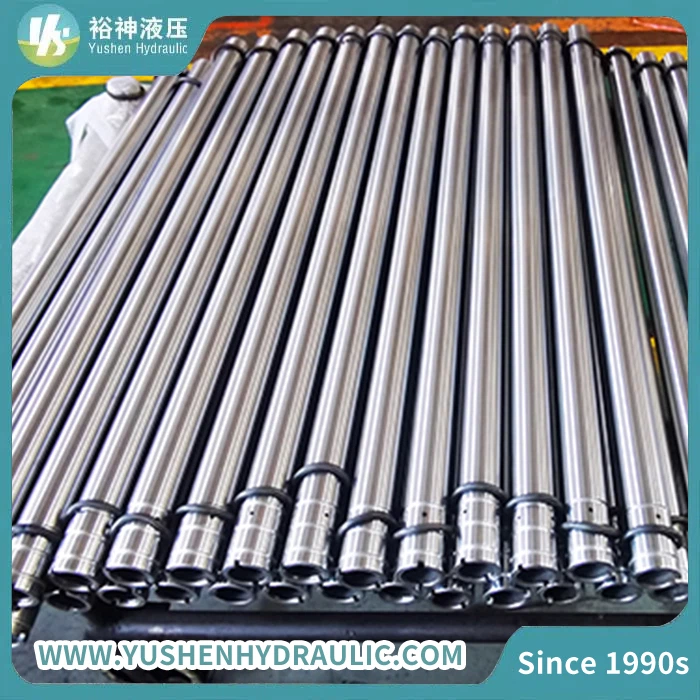
As a dedicated supplier of Stainless Steel Honed Tubes, I've witnessed firsthand the diverse applications and stringent requirements of these products. One critical property that often comes under the spotlight is the notch toughness of stainless steel honed tubes. In this blog, we'll delve into what notch toughness is, why it matters for stainless steel honed tubes, and how it impacts various industries.
Understanding Notch Toughness
Notch toughness refers to a material's ability to resist fracture when a notch or a sharp discontinuity is present. In the real - world applications of stainless steel honed tubes, notches can occur due to machining processes, accidental damage, or design features. A material with high notch toughness can absorb energy and prevent the rapid propagation of cracks that start from these notches.
When a force is applied to a material with a notch, stress concentrations occur at the tip of the notch. In materials with low notch toughness, these stress concentrations can lead to brittle fracture, where the material breaks suddenly without significant deformation. On the other hand, materials with high notch toughness can deform plastically at the notch tip, absorbing energy and preventing the crack from spreading rapidly.
Importance of Notch Toughness in Stainless Steel Honed Tubes
Structural Integrity
Stainless steel honed tubes are often used in structural applications where their ability to withstand stress and prevent failure is crucial. For example, in hydraulic cylinders, these tubes form the outer casing that houses the Piston Shaft. If the tube has low notch toughness, a small notch or scratch on its surface could lead to a catastrophic failure under pressure, endangering the entire hydraulic system.


Resistance to Impact
In industries such as construction and manufacturing, stainless steel honed tubes may be subjected to impact loads. A tube with high notch toughness can better absorb the energy from these impacts, reducing the risk of cracking or breaking. This is especially important in applications where the tubes are used in machinery that operates in harsh environments or where there is a risk of accidental collisions.
Fatigue Resistance
Many applications of stainless steel honed tubes involve cyclic loading, which can lead to fatigue failure over time. Notch toughness plays a significant role in a material's fatigue resistance. A tube with good notch toughness can better resist the initiation and propagation of cracks caused by cyclic stress, extending its service life and reducing maintenance costs.
Factors Affecting the Notch Toughness of Stainless Steel Honed Tubes
Alloy Composition
The alloy composition of stainless steel has a profound impact on its notch toughness. Different alloying elements, such as chromium, nickel, and molybdenum, can enhance the material's toughness. For example, austenitic stainless steels, which contain high levels of nickel, generally have better notch toughness compared to ferritic stainless steels. The addition of other elements like nitrogen can also improve the toughness and corrosion resistance of the stainless steel.
Heat Treatment
Heat treatment processes can significantly alter the microstructure of stainless steel, thereby affecting its notch toughness. Annealing, for instance, can relieve internal stresses and improve the material's ductility, leading to higher notch toughness. Quenching and tempering can also be used to achieve a balance between strength and toughness, depending on the specific requirements of the application.
Manufacturing Processes
The manufacturing processes used to produce stainless steel honed tubes can introduce notches or defects that may affect their notch toughness. For example, improper machining techniques can create sharp edges or surface irregularities that act as stress concentrators. On the other hand, honing is a precision machining process that can improve the surface finish of the tube, reducing the likelihood of stress concentrations and enhancing its notch toughness.
Testing the Notch Toughness of Stainless Steel Honed Tubes
There are several standard tests used to measure the notch toughness of materials, including the Charpy V - notch test and the Izod test.
Charpy V - notch Test
In the Charpy V - notch test, a specimen with a V - shaped notch is struck by a pendulum hammer. The energy absorbed by the specimen during fracture is measured, which provides an indication of its notch toughness. A higher energy absorption value indicates better notch toughness. This test is widely used in the industry to evaluate the impact resistance of materials and to ensure that they meet the required standards.
Izod Test
The Izod test is similar to the Charpy test, but the specimen is held in a vertical position and struck by the hammer. The Izod test is also used to measure the impact energy of a material with a notch, and it can provide valuable information about the notch toughness of stainless steel honed tubes.
Applications of Stainless Steel Honed Tubes with High Notch Toughness
Hydraulic and Pneumatic Systems
In hydraulic and pneumatic systems, stainless steel honed tubes are used to house the Hard Chromed Plated Piston Shaft Rod. The high notch toughness of these tubes ensures that they can withstand the high pressures and cyclic loads encountered in these systems without failing. This is essential for the reliable operation of machinery such as excavators, forklifts, and industrial presses.
Automotive Industry
In the automotive industry, stainless steel honed tubes are used in various applications, including shock absorbers and steering systems. The high notch toughness of these tubes is crucial for their ability to absorb shocks and vibrations, providing a smooth and safe driving experience. Additionally, the corrosion resistance of stainless steel makes these tubes suitable for use in automotive components that are exposed to harsh environmental conditions.
Marine and Offshore Applications
In marine and offshore applications, stainless steel honed tubes are used in structures such as pipelines, platforms, and shipbuilding. The high notch toughness of these tubes is essential for their ability to withstand the harsh marine environment, including corrosion, wave impacts, and dynamic loading. For example, Hollow Piston Rod Chromed Bar used in marine hydraulic systems require high notch toughness to ensure their long - term reliability.
Conclusion
The notch toughness of stainless steel honed tubes is a critical property that determines their performance and reliability in various applications. As a supplier of these tubes, we understand the importance of providing products with high notch toughness to meet the diverse needs of our customers. By carefully controlling the alloy composition, heat treatment, and manufacturing processes, we can ensure that our stainless steel honed tubes have excellent notch toughness, structural integrity, and resistance to impact and fatigue.
If you are in the market for high - quality stainless steel honed tubes with superior notch toughness, we invite you to contact us for procurement and further discussion. Our team of experts is ready to assist you in finding the right solution for your specific application requirements.
References
- ASM Handbook, Volume 3: Alloy Phase Diagrams, ASM International.
- "Metals Handbook: Properties and Selection: Irons, Steels, and High - Performance Alloys", ASM International.
- ASTM International standards for Charpy V - notch and Izod tests.