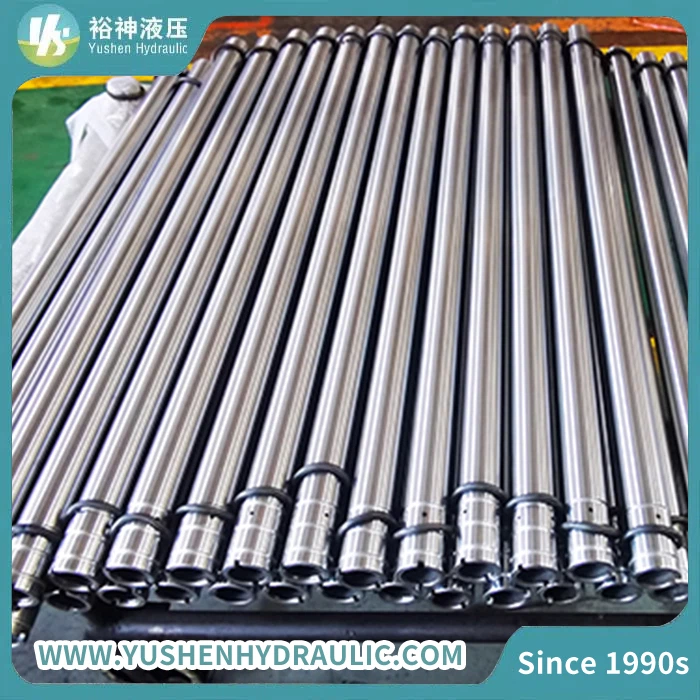
In the world of industrial components, the 1020 Cylinder Tube stands as a crucial element in various machinery and equipment. As a trusted supplier of 1020 Cylinder Tubes, I often encounter inquiries about its properties, especially its resistance to abrasion. In this blog, I will delve into the abrasion resistance of the 1020 Cylinder Tube, exploring the factors that influence it and how it performs in real - world applications.
Understanding the 1020 Cylinder Tube
The 1020 Cylinder Tube is a type of seamless steel tube made from 1020 steel, which is a low - carbon steel with a carbon content of approximately 0.18 - 0.23%. This type of steel is known for its good weldability, machinability, and formability. These tubes are commonly used in hydraulic cylinders, pneumatic cylinders, and other applications where a strong and reliable tube is required.
Factors Affecting Abrasion Resistance
Material Composition
The carbon content in 1020 steel plays a significant role in its abrasion resistance. Low - carbon steels like 1020 generally have lower hardness compared to high - carbon steels. Hardness is a key factor in abrasion resistance, as harder materials are more resistant to wear. However, the low carbon content also gives 1020 steel better ductility, which can be an advantage in some applications where the tube needs to withstand some deformation without cracking.


In addition to carbon, other alloying elements in the steel can also affect its abrasion resistance. For example, small amounts of manganese can improve the strength and hardenability of the steel, which may enhance its ability to resist abrasion.
Surface Finish
The surface finish of the 1020 Cylinder Tube is another important factor. A smooth surface finish can reduce friction and wear. When the tube has a rough surface, it is more likely to catch particles and debris, which can cause abrasion. Honing is a common process used to achieve a smooth surface finish on cylinder tubes. You can learn more about honed tubes for hydraulic cylinders at Honed Tube Stainless for Hydraulic Cylinder.
Heat Treatment
Heat treatment can significantly alter the properties of the 1020 Cylinder Tube, including its abrasion resistance. Processes such as quenching and tempering can increase the hardness of the steel, thereby improving its ability to resist wear. However, improper heat treatment can also lead to brittleness, which may cause the tube to crack under stress.
Abrasion Resistance in Different Applications
Hydraulic Cylinders
In hydraulic cylinders, the 1020 Cylinder Tube is often in contact with pistons and seals. The movement of the piston inside the tube can cause abrasion over time. The abrasion resistance of the tube is crucial to ensure the long - term performance of the hydraulic cylinder. A tube with good abrasion resistance can prevent leakage and maintain the efficiency of the hydraulic system.
Pneumatic Cylinders
Similar to hydraulic cylinders, pneumatic cylinders also rely on the 1020 Cylinder Tube to provide a smooth and reliable operation. The high - speed movement of the piston in a pneumatic cylinder can generate significant friction, and the tube needs to be able to withstand this abrasion.
Other Industrial Applications
The 1020 Cylinder Tube is also used in various other industrial applications, such as conveyor systems and machinery where linear motion is involved. In these applications, the tube may come into contact with different types of materials, including abrasive substances. Its abrasion resistance is essential to ensure the durability and reliability of the equipment.
Comparing with Other Components
Hard Chrome Plated Steel Bar
Hard Chrome Plated Steel Bar is another component commonly used in industrial applications. The chrome plating on the steel bar provides a hard and smooth surface, which can offer excellent abrasion resistance. Compared to the 1020 Cylinder Tube, the hard chrome plated steel bar may have better abrasion resistance in some cases, especially when dealing with highly abrasive environments. However, the 1020 Cylinder Tube has its own advantages, such as better weldability and lower cost.
Chrome Plated Smooth Rod
Chrome Plated Smooth Rod is also known for its good abrasion resistance. The chrome plating reduces friction and protects the rod from wear. Similar to the hard chrome plated steel bar, the chrome plated smooth rod may have superior abrasion resistance compared to the 1020 Cylinder Tube. But again, the 1020 Cylinder Tube is more suitable for applications where a tubular structure is required.
Testing and Evaluation of Abrasion Resistance
To accurately assess the abrasion resistance of the 1020 Cylinder Tube, various testing methods can be used. One common method is the pin - on - disc test, where a pin is pressed against a rotating disc made of the tube material under a specific load. The amount of wear on the pin and the disc is measured to evaluate the abrasion resistance.
Another method is the abrasive jet test, where an abrasive material is sprayed onto the surface of the tube at a high speed. The wear rate of the tube is then determined by measuring the weight loss or the change in surface profile.
Improving Abrasion Resistance
If the application requires higher abrasion resistance than what the standard 1020 Cylinder Tube can offer, there are several ways to improve it. One option is to apply a surface coating, such as a ceramic coating or a polymer coating. These coatings can provide an additional layer of protection against abrasion.
Another approach is to use a different grade of steel or alloy. For example, a high - carbon steel or a steel alloy with better abrasion - resistant properties can be used instead of 1020 steel. However, this may also increase the cost and may require some adjustments in the manufacturing process.
Conclusion
In conclusion, the 1020 Cylinder Tube has a certain level of abrasion resistance, which is influenced by factors such as material composition, surface finish, and heat treatment. While it may not be the most abrasion - resistant component in all situations, it offers a good balance between cost, weldability, and performance in many industrial applications.
If you are in need of 1020 Cylinder Tubes or have any questions about their abrasion resistance and suitability for your application, please feel free to contact us for a detailed discussion. We are committed to providing high - quality products and professional advice to meet your specific requirements.
References
- ASM Handbook, Volume 1: Properties and Selection: Irons, Steels, and High - Performance Alloys
- "Materials Science and Engineering: An Introduction" by William D. Callister, Jr. and David G. Rethwisch