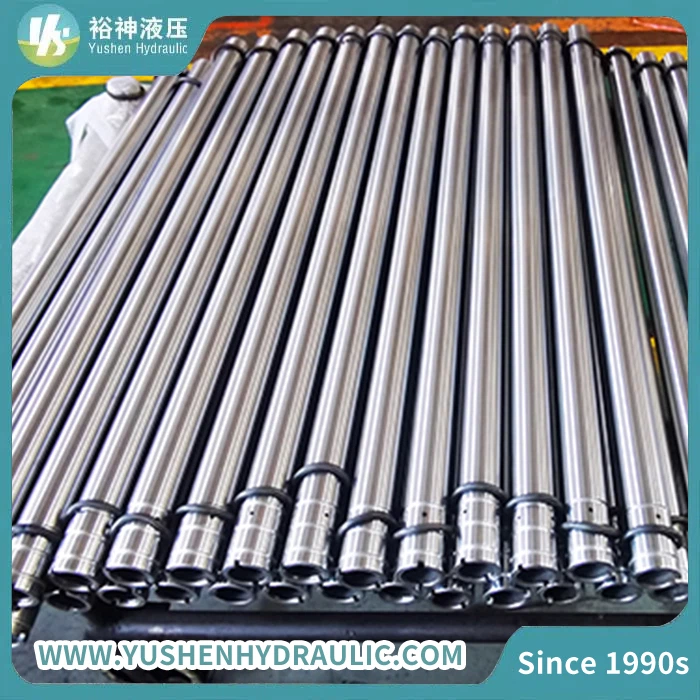
Hey there! As a piston rod supplier, I've seen my fair share of bent piston rods. It's a common issue that can throw a wrench in your machinery's operation. But don't worry, I'm here to walk you through how to straighten a bent piston rod.
First off, let's understand why a piston rod might get bent in the first place. There are a few reasons. Sometimes, it's due to excessive force or pressure on the rod during operation. Maybe there was a sudden shock or impact that the rod couldn't handle. Another reason could be improper installation or alignment. If the piston rod isn't installed correctly, it can experience uneven stress, leading to bending over time.
Now, before you start trying to straighten the rod, you need to assess the damage. Is it a minor bend or a major one? A minor bend might be fixable, but a severely bent rod could be beyond repair. You can use a straightedge to check the straightness of the rod. Place the straightedge along the length of the rod and look for any gaps. If the gap is small, you might be able to straighten it. But if it's large, you might need to consider replacing the rod.
If you've determined that the rod can be straightened, here are the steps you can take.


Step 1: Prepare the Workspace
Find a clean, flat surface to work on. You'll need a sturdy bench or table. Make sure you have all the necessary tools handy, such as a hydraulic press, a mallet, and a set of shims. Safety first! Wear safety glasses and gloves to protect yourself from any flying debris.
Step 2: Secure the Rod
Clamp the bent piston rod securely in a vise. Make sure it's held firmly so that it doesn't move during the straightening process. You can use soft jaws on the vise to prevent damage to the rod's surface.
Step 3: Apply Heat (Optional)
For some types of piston rods, applying heat can make the metal more malleable and easier to straighten. However, this step should be done with caution as overheating can damage the rod. Use a torch to heat the bent area evenly. You don't want to heat it too much, just enough to make it slightly warm to the touch.
Step 4: Use a Hydraulic Press
If you have a hydraulic press, this is the most effective way to straighten the rod. Place the bent area of the rod between the press plates. Slowly apply pressure to the press. Start with a small amount of pressure and gradually increase it. Keep an eye on the rod as you apply pressure. You should see it start to straighten. Be careful not to apply too much pressure too quickly, as this can cause the rod to break.
Step 5: Use a Mallet
If you don't have a hydraulic press, you can use a mallet to straighten the rod. Place a block of wood or a soft metal shim on the bent area. Then, gently tap the shim with the mallet. Start with light taps and gradually increase the force. Work your way along the bent area, tapping gently until the rod starts to straighten.
Step 6: Check the Straightness
After you've applied pressure or tapped the rod, use the straightedge again to check the straightness. If it's still not straight enough, repeat the process until you're satisfied with the result.
Step 7: Finish the Surface
Once the rod is straight, you might need to finish the surface. If the rod has a Hard Chrome Plated Steel Bar, you need to be careful not to damage the plating. You can use a fine-grit sandpaper to smooth out any rough areas.
Step 8: Test the Rod
Before reinstalling the rod, it's a good idea to test it. You can do this by rotating the rod in a bearing or a similar component. Make sure it rotates smoothly without any binding or wobbling.
Now, it's important to note that straightening a piston rod is not always the best solution. In some cases, it might be more cost-effective and reliable to replace the rod. If the rod has been severely damaged or if it's an old rod that's prone to further problems, it's better to invest in a new one.
As a piston rod supplier, I offer a wide range of high-quality piston rods, including Hydraulic Cylinder Chrome Plated Rod and rods that are compatible with ST52 Honing Tube for Hydraulic Cylinder. Our rods are made from high-quality materials and undergo strict quality control to ensure they meet the highest standards.
If you're in the market for new piston rods or if you have any questions about straightening or replacing your existing rods, don't hesitate to reach out. We're here to help you find the best solution for your needs. Contact us for a quote and let's start a conversation about your piston rod requirements.
References
- "Machinery's Handbook" - A comprehensive reference book for mechanical engineers and machinists.
- Manufacturer's guidelines for piston rod maintenance and repair.