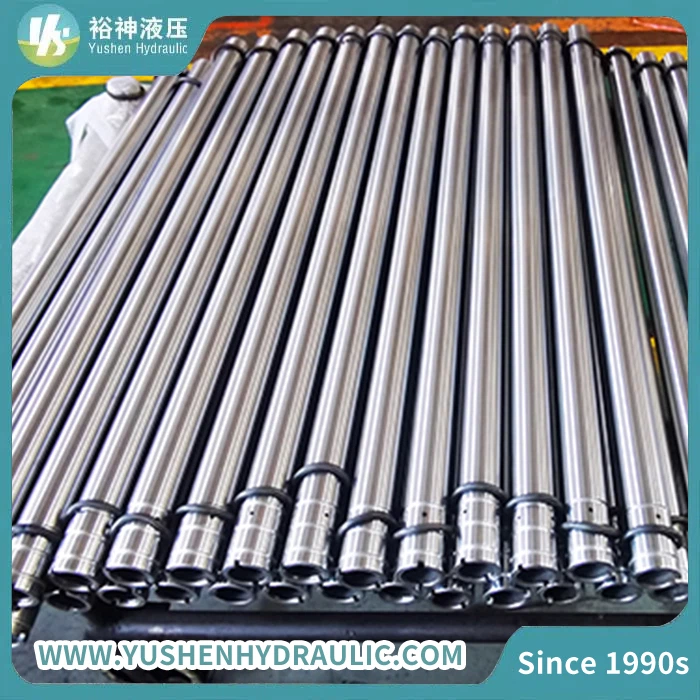
As a supplier of C45E Cylinder Tubes, I am often asked about the machining process of these essential components. In this blog post, I will share a detailed guide on how to machine C45E Cylinder Tubes, covering everything from material properties to the final finishing touches.
Understanding C45E Material
C45E is a medium carbon steel with good strength and machinability. It contains approximately 0.42 - 0.50% carbon, which gives it the necessary hardness and toughness for various applications, especially in hydraulic cylinders. The "E" in C45E indicates that it is a quality - controlled steel, meeting specific European standards.
Before starting the machining process, it is crucial to understand the properties of C45E. Its relatively high carbon content means that it can be heat - treated to achieve different levels of hardness. However, during machining, this carbon content can also cause some challenges, such as tool wear and the formation of built - up edges.
Pre - machining Preparation
Material Inspection
The first step is to inspect the raw C45E cylinder tube material. Check for any surface defects, such as cracks, scratches, or unevenness. Measure the dimensions of the tube to ensure they meet the required specifications. Any deviation from the standard dimensions can lead to problems during subsequent machining operations.
Tool Selection
Selecting the right tools is essential for efficient and accurate machining of C45E cylinder tubes. For turning operations, carbide inserts are commonly used due to their high hardness and wear resistance. High - speed steel (HSS) tools can also be used for some less demanding operations or when a more cost - effective option is needed.
For drilling, twist drills made of high - speed steel or carbide are suitable. When it comes to milling, end mills and face mills with appropriate geometries should be chosen based on the specific milling requirements, such as slotting or contouring.
Machining Operations
Turning
Turning is one of the primary machining operations for C45E cylinder tubes. It is used to reduce the outer diameter of the tube to the desired size and to create a smooth surface finish.


- Rough Turning: Start with rough turning to remove the majority of the excess material. Use a relatively large depth of cut and feed rate to increase productivity. However, be careful not to overload the tool or cause excessive vibration, which can affect the surface quality.
- Finish Turning: After rough turning, perform finish turning to achieve the final dimensions and surface finish. Use a smaller depth of cut and feed rate for a smoother surface. The cutting speed should also be adjusted according to the tool material and the workpiece material.
Drilling
Drilling is used to create holes in the C45E cylinder tube, such as for mounting or fluid passage.
- Center Drilling: First, use a center drill to create a small indentation at the drilling location. This helps to guide the twist drill and prevent it from wandering.
- Drilling the Hole: Select the appropriate drill bit size based on the required hole diameter. Use cutting fluid during drilling to cool the drill bit and reduce friction. This can improve the hole quality and extend the tool life.
Milling
Milling operations can be used to create flat surfaces, slots, or other complex features on the C45E cylinder tube.
- Face Milling: Face milling is used to create a flat surface on the end of the tube. Use a face mill with multiple cutting edges for efficient material removal.
- Slot Milling: Slot milling is used to create slots in the tube. Select the appropriate end mill size and geometry based on the slot width and depth.
Heat Treatment
Heat treatment can be applied to C45E cylinder tubes to improve their mechanical properties.
Annealing
Annealing is a heat treatment process that involves heating the tube to a specific temperature and then slowly cooling it. This process helps to relieve internal stresses, improve machinability, and refine the grain structure of the material.
Quenching and Tempering
Quenching and tempering can be used to increase the hardness and strength of the C45E cylinder tube. The tube is first heated to a high temperature and then rapidly cooled (quenched) in a suitable medium, such as oil or water. After quenching, the tube is tempered at a lower temperature to reduce brittleness and improve toughness.
Surface Finishing
Surface finishing is an important step to improve the performance and appearance of the C45E cylinder tube.
Grinding
Grinding can be used to achieve a very smooth surface finish. It is especially useful for removing any remaining surface irregularities after turning or milling. Use a grinding wheel with the appropriate grit size and hardness for the specific application.
Honing
Honing is a precision finishing process that is commonly used for the internal surface of the cylinder tube. It helps to improve the roundness, straightness, and surface finish of the bore. Honing is typically performed using a honing tool with abrasive stones.
Chrome Plating
Chrome plating can be applied to the outer surface of the C45E cylinder tube to improve its corrosion resistance and wear resistance. There are different types of chrome plating, such as Hydraulic Chrome Rod, Hard Chrome Plated Round Rod, and Chrome Hydraulic Cylinder Rod. Each type has its own characteristics and applications.
Quality Control
Throughout the machining process, quality control is essential to ensure that the C45E cylinder tubes meet the required specifications.
Dimensional Inspection
Use measuring tools such as calipers, micrometers, and gauges to check the dimensions of the tube at various stages of machining. Compare the measured values with the design specifications to ensure accuracy.
Surface Inspection
Inspect the surface of the tube for any defects, such as scratches, pits, or unevenness. Use surface roughness measuring instruments to measure the surface roughness and ensure it meets the requirements.
Conclusion
Machining C45E cylinder tubes requires a combination of proper material understanding, tool selection, machining operations, heat treatment, surface finishing, and quality control. By following the steps outlined in this blog post, you can produce high - quality C45E cylinder tubes that meet the needs of various applications.
If you are interested in purchasing C45E cylinder tubes or have any questions about the machining process, please feel free to contact us for further discussion and negotiation. We are committed to providing you with the best products and services.
References
- "Machining of Metals: An Introduction" by O. P. Khanna
- "Manufacturing Engineering and Technology" by S. Kalpakjian and S. R. Schmid