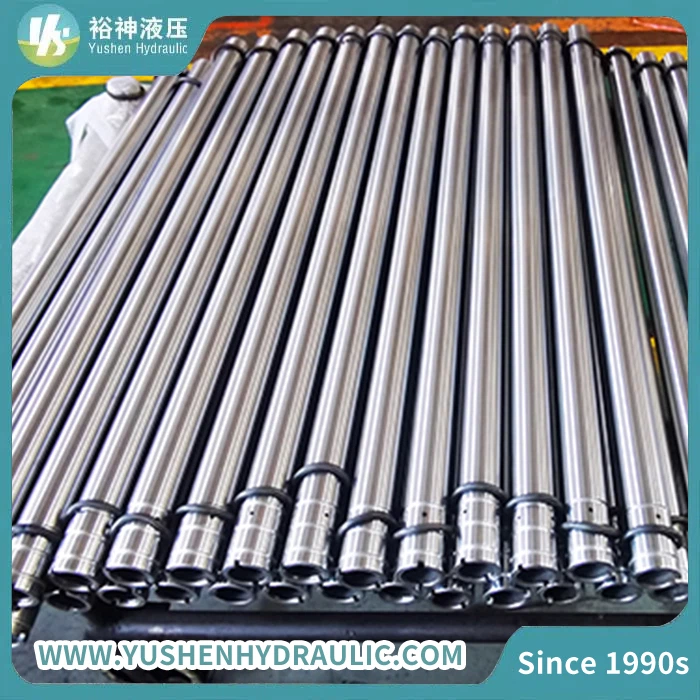
Hey there! I'm a supplier of Hydraulic Steel Honed Tubes, and today I wanna chat about how to heat - treat these tubes to boost their performance.
First off, let's understand why heat - treating is so important for Hydraulic Steel Honed Tubes. These tubes are used in hydraulic systems, where they need to withstand high pressures, wear, and corrosion. Heat - treating can enhance their mechanical properties like hardness, toughness, and fatigue resistance.
The Basics of Heat - Treating
Heat - treating involves a series of heating and cooling processes. The main steps usually include heating the tubes to a specific temperature, holding them at that temperature for a certain period, and then cooling them at a controlled rate.
Heating
The first step is to heat the Hydraulic Steel Honed Tubes to a precise temperature. This temperature depends on the type of steel used in the tubes. For most common steels used in hydraulic applications, the heating temperature can range from 800°C to 950°C. We use specialized furnaces to ensure uniform heating. If the heating is not uniform, it can lead to uneven hardness and other issues in the tubes.
Holding
After reaching the desired temperature, we need to hold the tubes at that temperature for a specific time. This is called the soaking time. The soaking time allows the internal structure of the steel to transform completely. It usually takes about 30 minutes to a few hours, depending on the size and thickness of the tubes. During this time, the steel atoms rearrange themselves, which is crucial for achieving the desired properties.
Cooling
The cooling process is just as important as the heating and holding steps. There are different cooling methods, such as air cooling, oil quenching, and water quenching. Air cooling is a relatively slow process and is often used for steels that don't require extremely high hardness. Oil quenching is faster than air cooling and can provide a good balance between hardness and toughness. Water quenching is the fastest method, but it can cause cracking in some steels, so it needs to be used with caution.
Benefits of Heat - Treating Hydraulic Steel Honed Tubes
Improved Hardness
One of the main benefits of heat - treating is increased hardness. A harder tube can resist wear better, which is essential in hydraulic systems where there is a lot of friction between moving parts. For example, in a hydraulic cylinder, the honed tube needs to withstand the movement of the piston, and a hard tube will last longer.
Enhanced Toughness
Heat - treating can also improve the toughness of the tubes. Toughness is the ability of the material to absorb energy without fracturing. In hydraulic applications, the tubes may experience sudden impacts or high - pressure surges. A tough tube can handle these situations better and prevent catastrophic failures.
Better Fatigue Resistance
Hydraulic systems often operate under cyclic loading conditions. Over time, this can lead to fatigue failure in the tubes. Heat - treating can improve the fatigue resistance of the tubes, allowing them to withstand more cycles of loading without cracking.
Different Heat - Treatment Processes
Annealing
Annealing is a heat - treatment process that involves heating the tubes to a high temperature and then cooling them slowly. This process is used to relieve internal stresses in the tubes, improve machinability, and refine the grain structure. After annealing, the tubes become softer and more ductile.
Normalizing
Normalizing is similar to annealing, but the cooling is done in air instead of a controlled slow cooling. This process results in a more uniform grain structure and improved mechanical properties compared to as - rolled or as - forged tubes. Normalized tubes are often used in applications where a good balance of strength and toughness is required.
Quenching and Tempering
Quenching and tempering is a two - step process. First, the tubes are quenched in oil or water to achieve high hardness. Then, they are tempered at a lower temperature to reduce the brittleness caused by quenching. This process can produce tubes with high strength, hardness, and toughness, making them suitable for high - performance hydraulic applications.
Quality Control in Heat - Treating
To ensure the quality of the heat - treated Hydraulic Steel Honed Tubes, we implement strict quality control measures. We use non - destructive testing methods such as ultrasonic testing to check for internal defects in the tubes. We also perform hardness testing at multiple points on the tubes to ensure uniform hardness. Additionally, we conduct metallographic analysis to examine the internal structure of the steel and make sure it meets the required specifications.
Related Products
If you're interested in other related products, we also offer Hollow Chrome Rod and Hard Chromed Hydraulic Cylinder Piston Rod. These products are also crucial components in hydraulic systems and are manufactured with high - quality standards.


Conclusion
Heat - treating is a vital process for improving the performance of Hydraulic Steel Honed Tubes. By carefully controlling the heating, holding, and cooling processes, we can achieve the desired mechanical properties such as hardness, toughness, and fatigue resistance. If you're in the market for high - quality Steel Hydraulic Honed Tube, feel free to reach out for a chat about your specific needs. We're always here to help you find the best solutions for your hydraulic applications.
References
- ASM Handbook Volume 4: Heat Treating. ASM International.
- Metals Handbook Desk Edition, 3rd Edition. ASM International.